
Weeks 1–2
Pain
Calm the joint down.
Hands-on work and smarter loading settle the irritated joint and tendons, starting your very first visit.
What We Treat
The stairs you take one at a time. The first few steps out of the car. The hip that picks which side you sleep on. It is fixable, and it starts with a cause-first assessment, not a guess.
Sound Familiar?
Two or more? You are not slowing down, you are working around something. You are the one who never sits down, which is exactly why nobody has ever properly looked at this.
Why It Happens
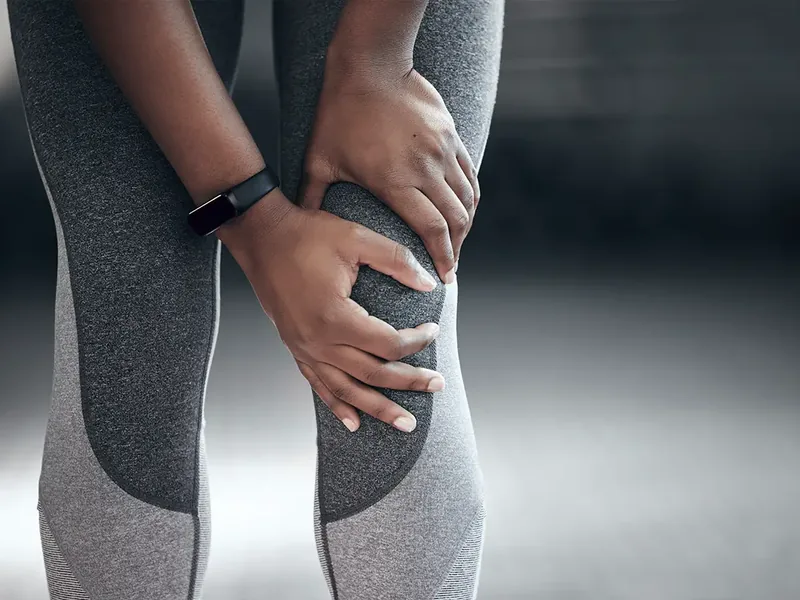
A knee is stuck in the middle. It does whatever the hip and the foot leave it to do. When the glutes get weak, the knee ends up carrying load that was never meant for it. When the hip loses rotation, the knee twists to make up the difference. Cartilage and tendons get irritated by that mismatch, and they let you know on the stairs first. The hip often does the same thing in reverse.
Which is why a scan showing wear and tear does not explain why it hurts today. A cause-first assessment looks at how the whole leg loads: hip strength, knee control, ankle range, and how you actually move when you stand up or take a step down. Sort out the mismatch and the joint gets a lot quieter. It is also why a generic quad stretch keeps disappointing you.
The Honest Truth
Nobody regrets starting too early. Every week, someone in our clinic says they regret waiting.
How We Fix It
It starts with a cause-first assessment. Then it is one-on-one with a licensed physiotherapist, every visit, and a plan with an endpoint instead of an open tab.
Weeks 1–2
Pain
Hands-on work and smarter loading settle the irritated joint and tendons, starting your very first visit.
Weeks 2–6
Prime
Targeted mobility gives back the hip rotation and knee range your leg has been working around for months.
Weeks 6–10
Perform
Progressive glute, quad and single-leg strengthening puts the load back where the joint always needed it.
Weeks 10+
Prevent
Stairs, squats, hills and walking distance get tested under real load before you are cleared: that’s the endpoint, not just another appointment.
This is my second time being here for the shockwave therapy on my knee for patella tendinitis. From my very first visit to last they gave me new stretching techniques, stability exercises etc to continue to get back to 100 percent. Thank you very much for getting my knee back to 100 percent.
Shared by Corey D. · Hip and Knee Pain
Visit one: the whole leg gets assessed, not just the sore knee
Prevent phase: stairs and hills without doing the maths first
Questions, Answered
No. You can book straight in and get assessed. A few extended health plans still ask for a referral, so it is worth one look at yours before you call, and if you need one we will tell you exactly what to ask for. You also do not need a scan first. If your assessment turns up something that genuinely needs imaging, we will help you get it.
Usually, yes. We direct bill Sun Life, Manulife, Medavie Blue Cross, Desjardins Insurance, Industrial Alliance, Standard Life, WSIB, Cowan and Johnston Group, so the paperwork is ours and you are not paying out of pocket and waiting to be reimbursed. If your plan is not on that list, we check your coverage with you before treatment starts, so nothing lands as a surprise.
You get a plan with an endpoint, not an open-ended string of appointments. A licensed physiotherapist maps the four phases, Pain, Prime, Perform and Prevent, to what your leg is actually missing, so you always know which phase you are in and what earns you the next one. On the second question: loading a sore hip or knee is done in steps you can handle, not in one brave session. If a movement is too much, you say so and it gets changed that visit.
Book Your Visit
Request a time and a real person calls you back. No phone tree. No ‘someone will reach out.’ Just a plan.
5.0 · 450+ Google reviews
A real person calls you back
Step 1 of 6
That is the hard part done. We will call during business hours to lock in your time.
Visit Us